
skip navigation
Western Asset Management Company
Blog

Stay up to date on timely topics and market events. Subscribe to our Blog now.

MARKETS
26 May 2026

UK Gilt Market Outlook—Balancing Global Shocks and Domestic Risks

By Dean French

Stay up to date on timely topics and market events. Subscribe to our Blog now.

There has been no shortage of commentary on global government bond markets in recent weeks as yields have risen to levels not seen in many years, or in some cases, ever. This is especially true for the UK gilt market where several factors have combined to amplify the rise in yields. This blog post shares some of our high-level thoughts on the outlook and how we are positioned in global portfolios.

The Pre-Iran Outlook

First, it is worth taking a moment to consider the outlook for the UK gilt market that had prevailed prior to the war in Iran. We had written last year about our constructive view as we expected further disinflation progress, a looser labour market and slowing wage growth to provide confidence for the Bank of England (BoE) to reduce its monetary policy restrictiveness further than the market was discounting. In the months that followed, the market consensus converged towards our view and UK gilts rallied as the market expected the BoE to lower its policy rate to 3.25%. Given that narrowing between our view and market pricing, and with consideration to the potential for political risk to resurface in 2026, we significantly reduced our overweight UK duration stance in the final quarter of last year.

Post-Iran

The war in Iran and the energy price shock that resulted from the closure of the Strait of Hormuz have clearly shifted the outlook abruptly. One way to illustrate this is to compare the BoE’s inflation projections in February (pre-war) and April (Exhibit 1). Prior to the jump in energy prices, inflation was set to return to the 2% inflation target in the second quarter of this year. Instead, inflation is now expected to rise later this year as higher prices pass through.
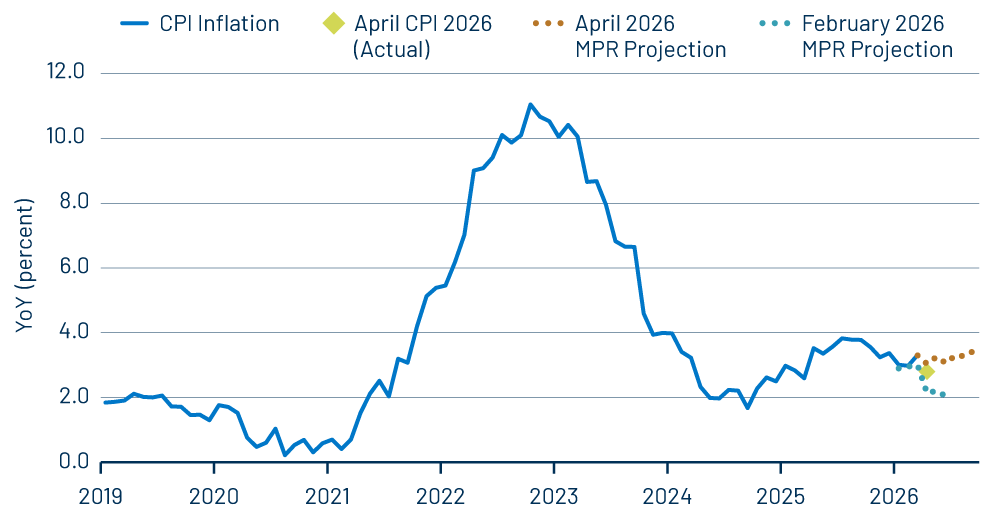
Exhibit 1: BoE Consumer Inflation Price Projections – April vs February 2026
BoE Consumer Inflation Price Projections – April vs February 2026
Source: Bank of England’s Monetary Policy Report, Bloomberg. As of 20 May 2026. Select the image to expand the view.

Correspondingly, the market has moved from pricing additional policy rate cuts to discounting multiple rate hikes (Exhibit 2).
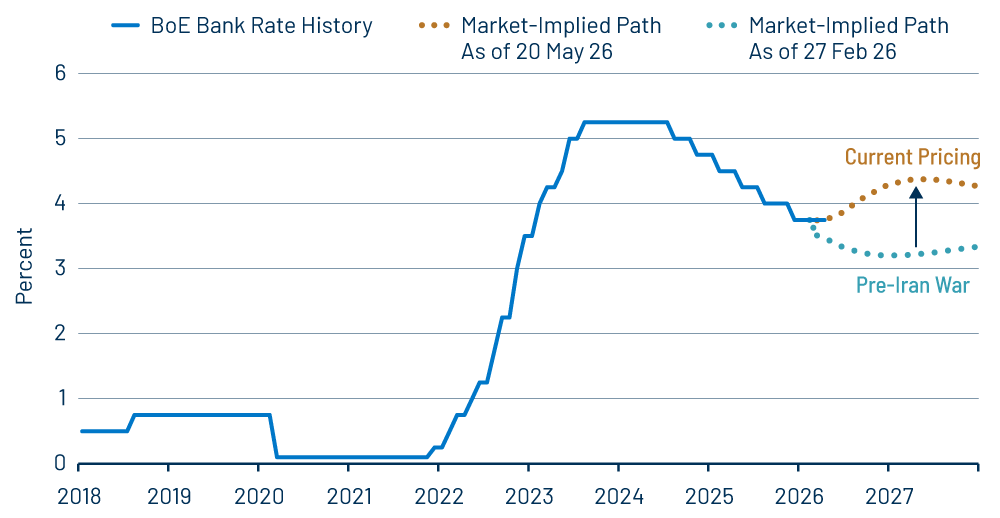
Exhibit 2: BoE Bank Rate History, Alongside Market-Implied Rate Paths
BoE Bank Rate History, Alongside Market-Implied Rate Paths
Source: Bloomberg, Western Asset. As of 20 May 2026. Select the image to expand the view.

Political Risks

Speculation over Prime Minister Sir Keir Starmer’s position has been a topic of conversation for much of the past year. Public dissatisfaction with his ruling Labour government (Exhibit 3) has seen declining support in polls, towards alternative parties both to the left (Green Party) and the right (Reform). While the next general election is not due until 2029, poor results in local and devolved elections at the start of this month acted as a catalyst for several Labour MPs to call publicly for a change in leadership, hoping to restore the Labour party’s standing among voters. Momentum is clearly building towards a leadership challenge, with political and fiscal uncertainty likely to remain for some months to come.
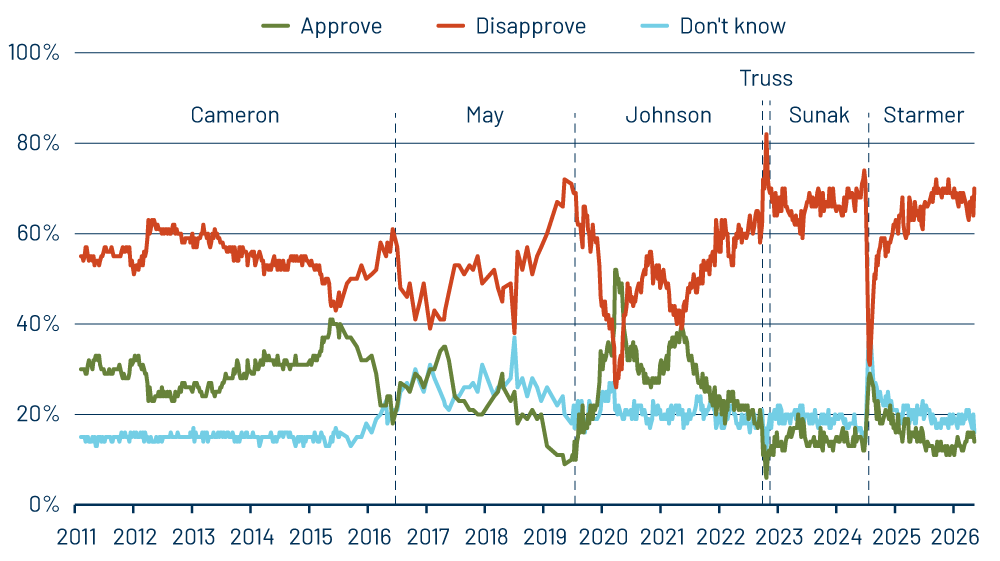
Exhibit 3: History of UK Prime Minister Approval/Disapproval Ratings
History of UK Prime Minister Approval/Disapproval Ratings
Source: YouGov, Western Asset. As of 20 May 2026. Select the image to expand the view.

Our Current Thoughts and Positioning

The UK is highly exposed to the energy shock given its reliance on imports and limited strategic storage capacity. Additionally, a relatively high proportion of the UK’s debt is inflation-linked, which worsens the fiscal projections as inflation rises. The move by Labour MPs towards replacing Starmer raises the prospect of a looser commitment to the current self-imposed fiscal rules and additional public borrowing. Similarly, the prospect of a seventh prime minister in less than 10 years does little to encourage overseas investment and growth in the UK. Therefore, a rise in gilt yields is understandable.

However, there is a reasonable debate whether the BoE tightening currently priced by the market (Exhibit 2) may be too much. Our assessment of the economic data, particularly the rise in unemployment and slowing wage growth, leaves us to expect domestic inflationary pressures to remain contained. Surveys of businesses since the start of the Iran war have shown that firms expect to remain very cautious in their hiring intentions. While almost two thirds of firms indicate they plan to pass on higher costs through pricing, the same amount expect lower profit margins, and half the firms expect lower sales volumes, which begs the question of how strong their pricing power will be.

As a result, with Bank Rate at 3.75% currently and medium-term inflation expectations remaining anchored, we believe that there is scope for the BoE to hold its current policy setting while it monitors developments in the Middle East and additional incoming data. Recent comments from various Monetary Policy Committee members note how financial conditions have already tightened as market-based interest rates have moved meaningfully higher and real incomes have been squeezed, mitigating some of the urgency to act.
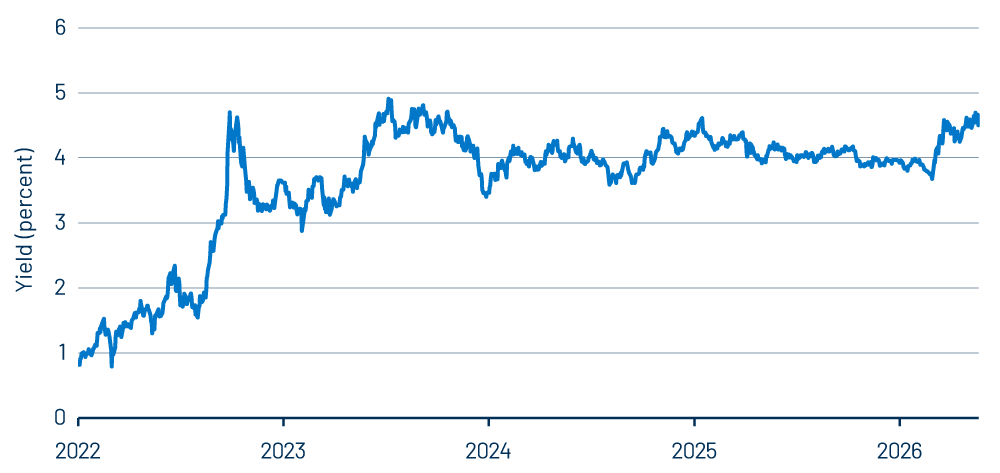
Exhibit 4: History of 5-year UK Government Bond Yields
History of 5-year UK Government Bond Yields
Source: Bloomberg. As of 20 May 2026. Select the image to expand the view.

The situation in the Middle East remains highly unpredictable and the threat of renewed escalation or an extended closure of the Strait is not conducive to an overly pronounced overweight to duration despite the rise in yields. However, in our view the current UK gilt yields offer an attractive opportunity for fixed income investors. We favour the 5-year part of the yield curve, which should benefit if the market does moderate its view on expected BoE tightening, while being less exposed to the possibility of a further rise in political/fiscal risk premium and the shifting structural demand of UK pension funds.

© Western Asset Management Company, LLC 2026. The information contained in these materials ("the materials") is intended for the exclusive use of the designated recipient ("the recipient"). This information is proprietary and confidential and may contain commercially sensitive information, and may not be copied, reproduced or republished, in whole or in part, without the prior written consent of Western Asset Management Company ("Western Asset").
Past performance does not predict future returns. These materials should not be deemed to be a prediction or projection of future performance. These materials are intended for investment professionals including professional clients, eligible counterparties, and qualified investors only.
For the Franklin Templeton global-non product disclosures, please click here.
These materials have been produced for illustrative and informational purposes only. These materials contain Western Asset's opinions and beliefs as of the date designated on the materials; these views are subject to change and may not reflect real-time market developments and investment views.
Third party data may be used throughout the materials, and this data is believed to be accurate to the best of Western Asset's knowledge at the time of publication, but cannot be guaranteed. These materials may also contain strategy or product awards or rankings from independent third parties or industry publications which are based on unbiased quantitative and/or qualitative information determined independently by each third party or publication. In some cases, Western Asset may subscribe to these third party's standard industry services or publications. These standard subscriptions and services are available to all asset managers and do not influence rankings or awards in any way.
Investment strategies or products discussed herein may involve a high degree of risk, including the loss of some or all capital. Investments in any products or strategies described in these materials may be volatile, and investors should have the financial ability and willingness to accept such risks.
Unless otherwise noted, investment performance contained in these materials is reflective of a strategy composite. All other strategy data and information included in these materials reflects a representative portfolio which is an account in the composite that Western Asset believes most closely reflects the current portfolio management style of the strategy. Performance is not a consideration in the selection of the representative portfolio. The characteristics of the representative portfolio shown may differ from other accounts in the composite. Information regarding the representative portfolio and the other accounts in the composite are available upon request. Statements in these materials should not be considered investment advice. References, either general or specific, to securities and/or issuers in the materials are for illustrative purposes only and are not intended to be, and should not be interpreted as, recommendation to purchase or sell such securities. Employees and/or clients of Western Asset may have a position in the securities or issuers mentioned.
These materials are not intended to provide, and should not be relied on for, accounting, legal, tax, investment or other advice. The recipient should consult its own counsel, accountant, investment, tax, and any other advisers for this advice, including economic risks and merits, related to making an investment with Western Asset. The recipient is responsible for observing the applicable laws and regulations of their country of residence.
Founded in 1971, Western Asset Management Company is a global fixed-income investment manager with offices in Pasadena, New York, London, Singapore, Tokyo, Melbourne, São Paulo, Hong Kong, and Zürich. Western Asset is a wholly owned subsidiary of Franklin Resources, Inc. but operates autonomously. Western Asset is comprised of six legal entities across the globe, each with distinct regional registrations: Western Asset Management Company, LLC, a registered Investment Adviser with the Securities and Exchange Commission; Western Asset Management Company Ltda. is regulated by Comissão de Valores Mobiliários; Western Asset Management Company Pty Ltd ABN 41 117 767 923 is the holder of the Australian Financial Services License 303160; Western Asset Management Company Pte. Ltd. Co. Reg. No. 200007692R is a holder of a Capital Markets Services License for fund management and regulated by the Monetary Authority of Singapore; Western Asset Management Company Ltd, a registered Financial Instruments Business Operator and regulated by the Financial Services Agency of Japan; and Western Asset Management Company Limited is authorised and regulated by the Financial Conduct Authority ("FCA") (FRN 145930). This communication is intended for distribution to Professional Clients only if deemed to be a financial promotion in the UK as defined by the FCA. This communication may also be intended for certain EEA countries where Western Asset has been granted permission to do so. For the current list of the approved EEA countries please contact Western Asset at +44 (0)20 7422 3000.