skip navigation
Western Asset Management Company
Blog

Stay up to date on timely topics and market events. Subscribe to our Blog now.

MARKETS
May 05, 2026

Weekly Municipal Monitor—April Rebound

By Sam Weitzman

Stay up to date on timely topics and market events. Subscribe to our Blog now.

Macros, Markets and Munis

Municipals posted negative returns last week, in line with most fixed-income sectors, as markets shifted focus to Federal Reserve (Fed) policy dynamics alongside mixed economic data. As confirmation hearings for Fed Chair nominee Kevin Warsh continued, the Fed held rates unchanged. Notably, the meeting featured an elevated level of dissent, as four members broke from the majority, with three objecting to an easing bias in light of higher energy prices. On the economic front, first-quarter GDP rose to 2.0% and core Personal Consumption Expenditures (PCE) moved higher as expected. Meanwhile, US Treasury yields moved higher across the curve, with rates rising approximately 10 basis points (bps) in shorter maturities and 5 bps in longer maturities, resulting in a flatter curve. Municipal bonds generally followed suit, with the curve exhibiting a similar flattening bias, and supply and demand both remained elevated. This week we provide a muni market review for the month of April.

Muni Demand Remained Steady Amid Elevated Supply Conditions

Fund Flows ($615 million of net inflows): During the week ending April 29, weekly reporting municipal mutual funds recorded $615 million of net inflows, according to Lipper. The long-term category recorded $196 million of inflows, the intermediate category reported $233 million of inflows and the short-term category recorded $85 million of net inflows. Last week’s inflows bring year-to-date (YTD) inflows to $30 billion.

Supply (YTD supply of $185 billion; up 17% YoY): The muni market recorded $10 billion of new-issue supply last week, down 20% from the prior week. YTD new-issue supply of $185 billion is 17% higher than the prior year, with tax-exempt issuance up 18% year-over-year (YoY) and taxable issuance up 10%, respectively. This week’s calendar is expected to pick up to $13 billion. Largest deals include $750 million Oklahoma City Public Property Authority and $400 million City of Philadelphia transactions.

This Week in Munis: April Rebound

Fixed-income markets were focused on escalating geopolitical tensions in April, as rising oil prices fueled concerns about inflation. While ceasefire agreements provided some optimism early in the month, Treasury yields ultimately moved higher amid stalled diplomatic progress and uncertainty surrounding the Fed leadership transition. In total, Treasury yields increased by 5-8 bps across the curve. Municipals shrugged off the negative returns seen in taxable fixed-income markets, as well as the traditional technical weakness that typically pressures the asset class in April. High-grade municipal yields rallied 8-16 bps across intermediate and shorter maturities during the month, and the Bloomberg Municipal Bond Index returned 1.15%. The rebound from March’s steep underperformance led YTD returns back into positive territory at 0.97%.
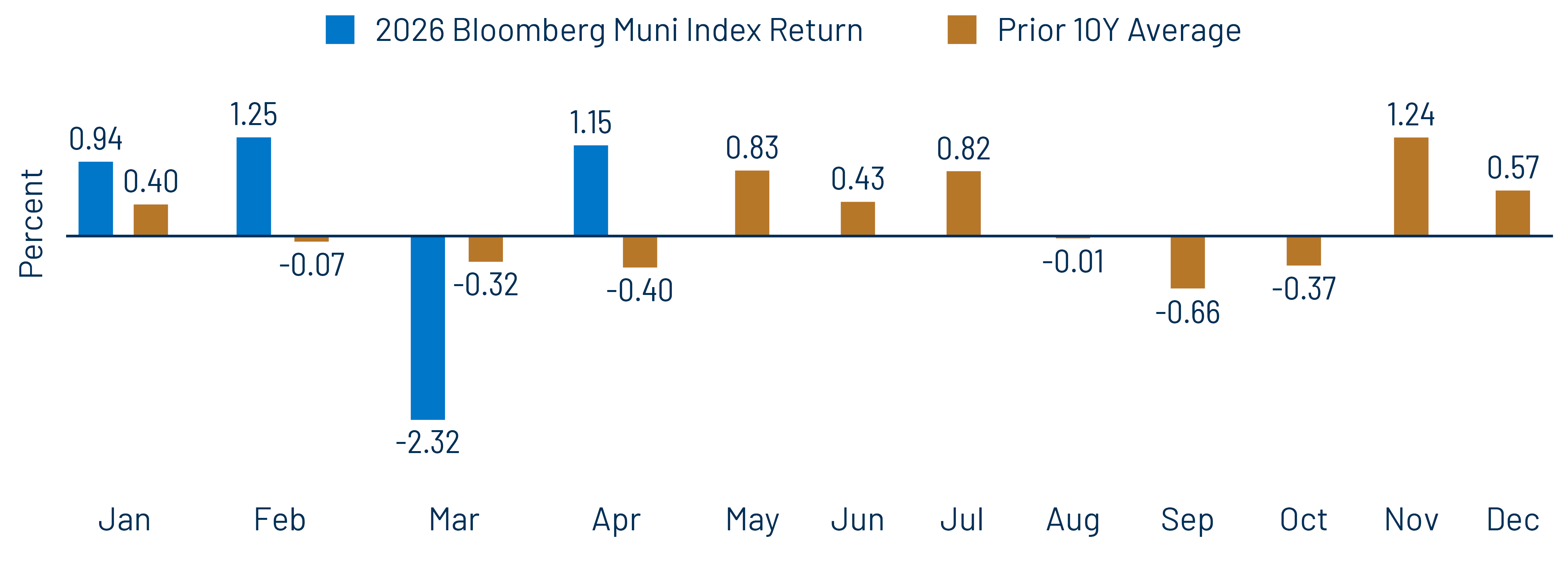
Exhibit 1: Bloomberg Muni Index Return by Month (2026 vs. Prior 10-Year Average)
Bloomberg Muni Index Return by Month (2026 vs. Prior 10-Year Average)
Source: Western Asset. As of 30 Apr 26. Select the image to expand the view.

Municipal technicals began the month on weaker footing as tax season concluded, but improved as April progressed. April new issuance was elevated at $51 billion, slightly below the $53 billion recorded both in March and April of 2025. Demand remained firm, with municipal mutual funds recording approximately $5 billion of net inflows during the month, largely comprised of long-term fund flows, according to Lipper. YTD inflows reached approximately $30 billion through April, which if sustained through year-end would outpace the prior year’s demand trend.
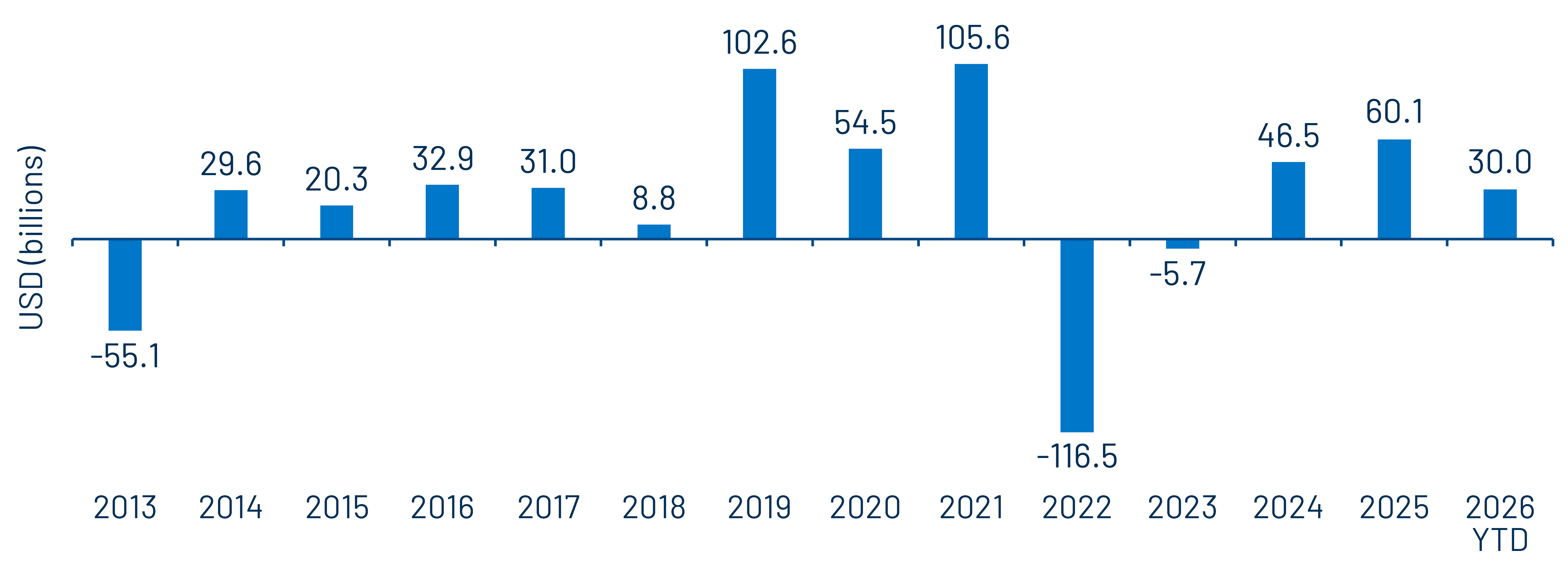
Exhibit 2: Municipal Mutual Fund Flows
Municipal Mutual Fund Flows
Source: Western Asset, ICI, Lipper. As of 30 Apr 26. Select the image to expand the view.

Credit fundamentals continue to demonstrate resilience, though late-cycle characteristics are emerging. Several large issuers are contending with delayed budgets and projecting longer-term budgetary shortfalls. So far this year, the three major rating agencies have downgraded more debt than they have upgraded, by a ratio of 1.3x. In the high-yield segment, some larger issuers have drawn on debt service reserve funds and may pursue restructurings. That said, the broader municipal market continues to benefit from strong revenue collections and elevated cash balances. However, given relatively tight spread levels, Western Asset believes active credit selection remains critical.
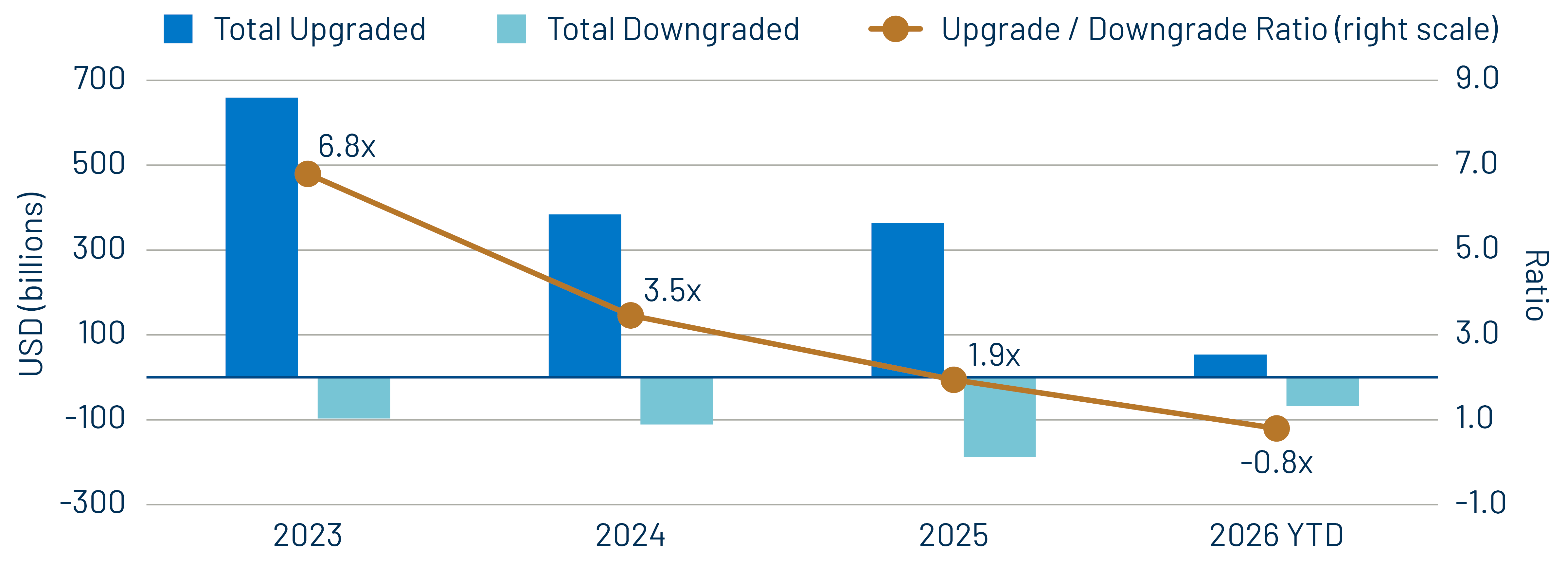
Exhibit 3: Moodys, S&P, and Fitch Rating Changes by Par Value
Moodys, S&P, and Fitch Rating Changes by Par Value
Source: Bloomberg. As of 31 Mar 26. Select the image to expand the view.

Despite recent outperformance, Western Asset believes the municipal market continues to offer attractive after-tax income opportunities. The Bloomberg Municipal Bond Index yield-to-worst stands at 3.68%, or 6.22% on a taxable-equivalent basis for top federal taxpayers, above historical averages and competitive with lower-rated taxable fixed-income sectors. Income opportunities have improved across much of the curve, with 10-year high-grade yields rising more than 20 bps YTD to approximately 3.0%, and longer maturities increasing by 17 bps to around 4.3%. As seasonal technical headwinds fade, these levels could present an attractive opportunity for muni investors to reposition income and risk exposures in line with overall objectives.

Municipal Credit Curves and Relative Value
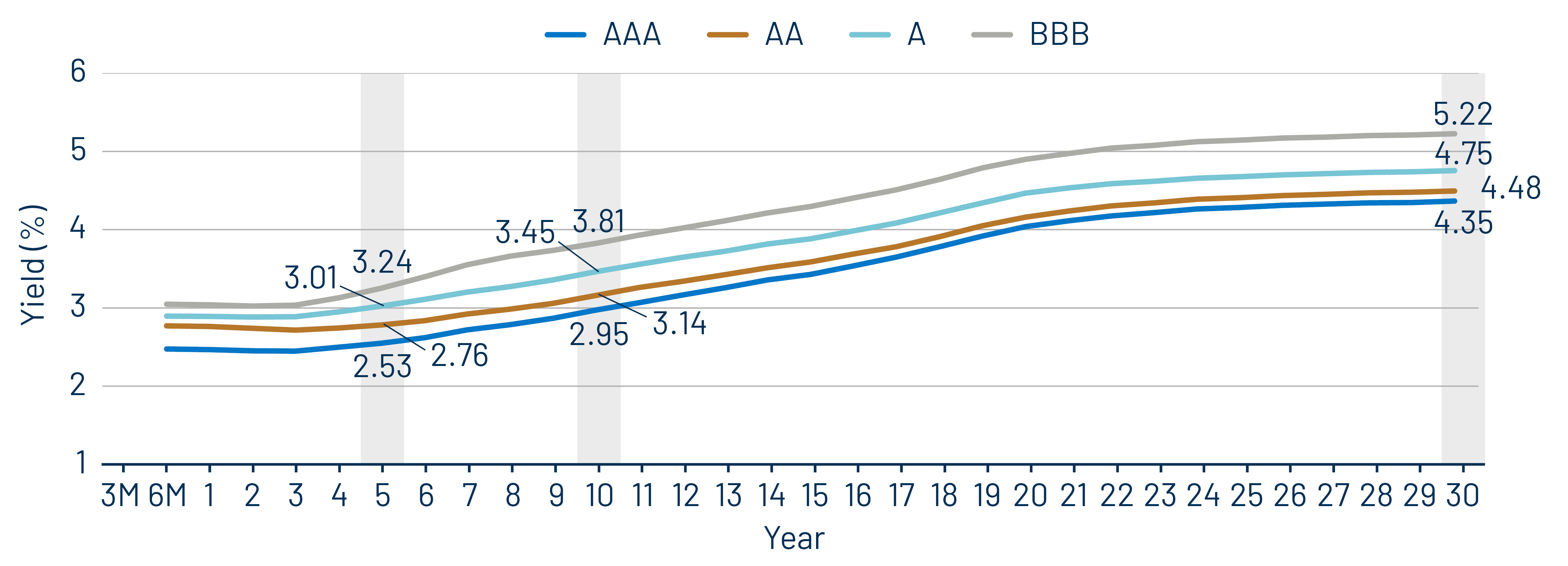
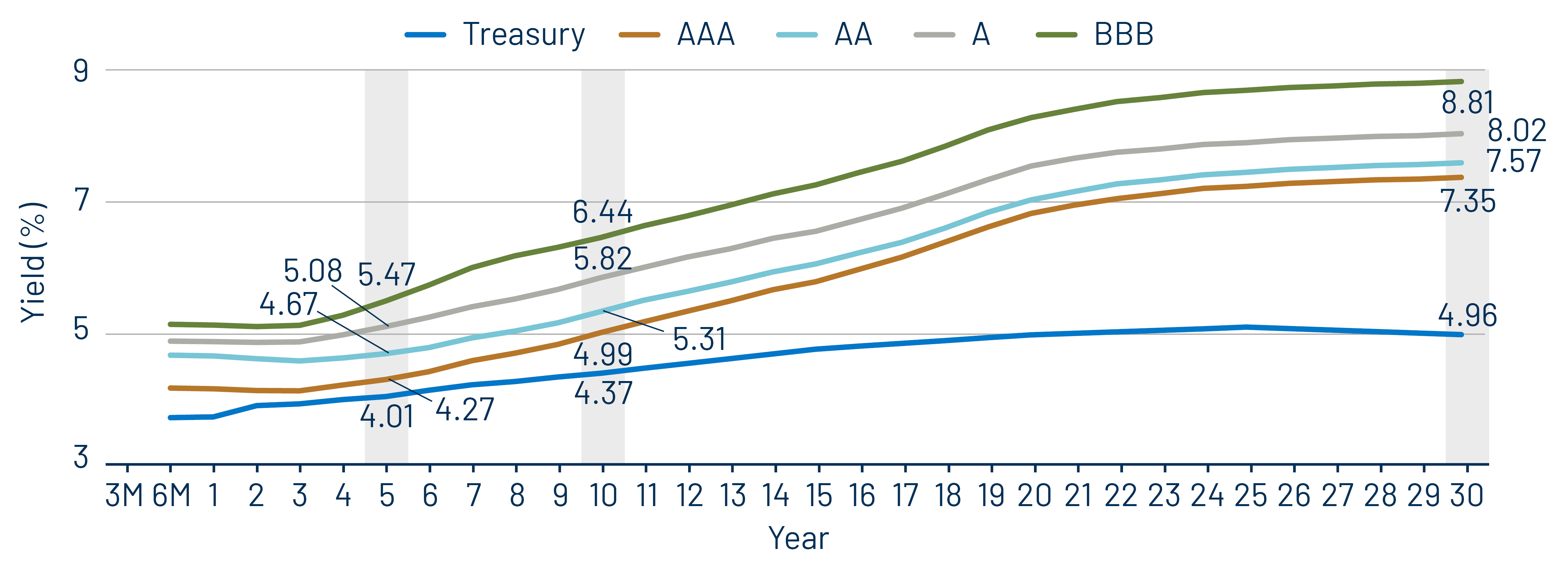
Exhibit 4: Muni Credit Curves
Muni Credit Curves
Source: Bloomberg, Western Asset. As of 01 May 26. Bloomberg Valuation Service (BVAL) Municipal Credit Indices (AAA, AA, A, BBB, respectively) and US Sovereign Curves. Taxable-Equivalent Muni Credit Curves consider the top marginal effective tax rate of 40.8%. AA Muni is represented by the US General Obligation AA Muni BVAL Yield Curve. The BVAL curve is populated with pricing from uninsured AA General Obligation bonds. A Muni is represented by the US General Obligation A Muni BVAL Yield Curve. The BVAL curve is populated with pricing from uninsured A General Obligation bonds. BBB Muni is represented by the US General Obligation BBB Muni BVAL Yield Curve. The BVAL curve is populated with pricing from uninsured BBB General Obligation bonds. Indices are unmanaged and one cannot directly invest in them. They do not include fees, expenses or sales charges. Past performance is not an indicator or a guarantee of future results. Select the image to expand the view.
Exhibit 5: Taxable-Equivalent Muni Credit Curves
Taxable-Equivalent Muni Credit Curves
Source: Bloomberg, Western Asset. As of 01 May 26. Bloomberg Valuation Service (BVAL) Municipal Credit Indices (AAA, AA, A, BBB, respectively) and US Sovereign Curves. Taxable-Equivalent Muni Credit Curves consider the top marginal effective tax rate of 40.8%. AA Muni is represented by the US General Obligation AA Muni BVAL Yield Curve. The BVAL curve is populated with pricing from uninsured AA General Obligation bonds. A Muni is represented by the US General Obligation A Muni BVAL Yield Curve. The BVAL curve is populated with pricing from uninsured A General Obligation bonds. BBB Muni is represented by the US General Obligation BBB Muni BVAL Yield Curve. The BVAL curve is populated with pricing from uninsured BBB General Obligation bonds. Indices are unmanaged and one cannot directly invest in them. They do not include fees, expenses or sales charges. Past performance is not an indicator or a guarantee of future results. Select the image to expand the view.
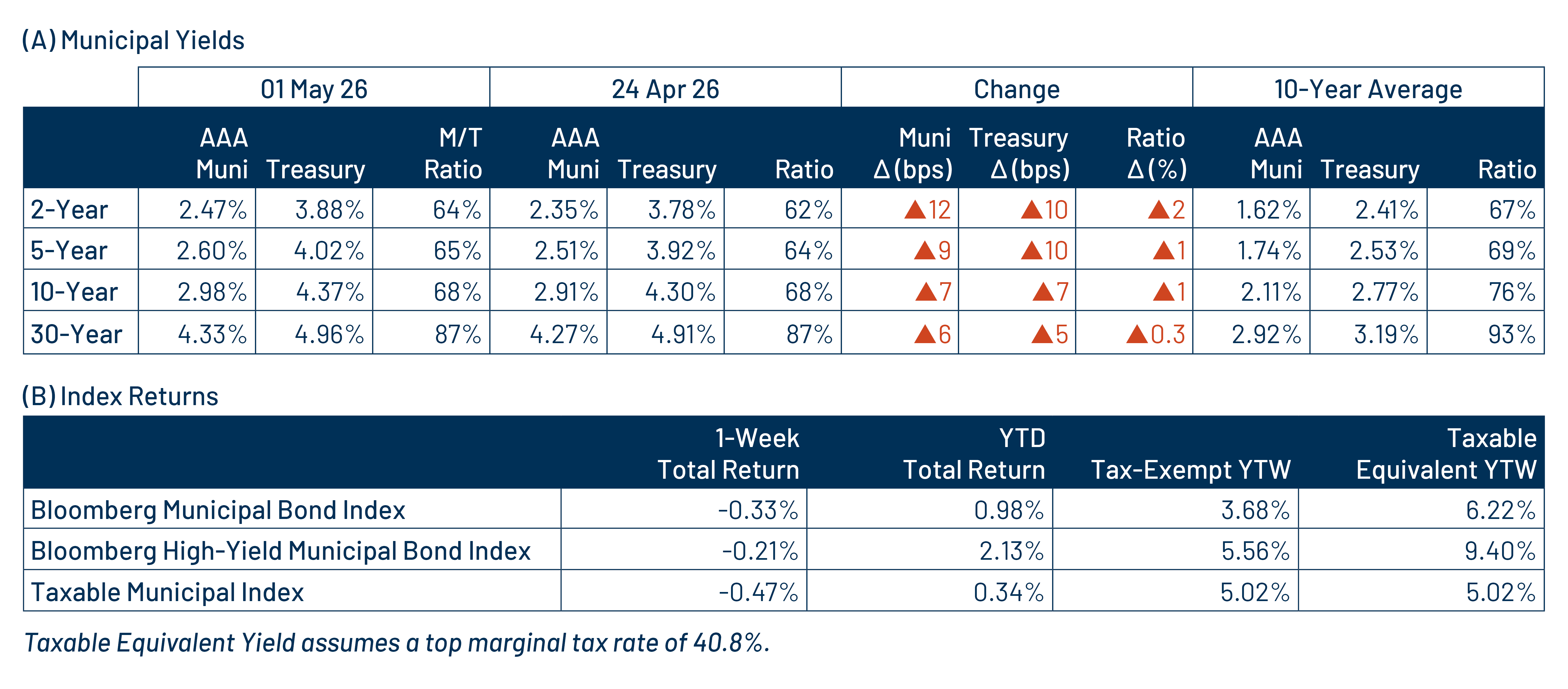
Exhibit 6: AAA Munis vs. Treasuries
AAA Munis vs. Treasuries
Source: Muni Yields: Thomson Reuters MMD, Treasury Yields: Bloomberg. As of 01 May 26. Past performance is not a guarantee of future results. It is not possible to invest directly in an index. Select the image to expand the view.
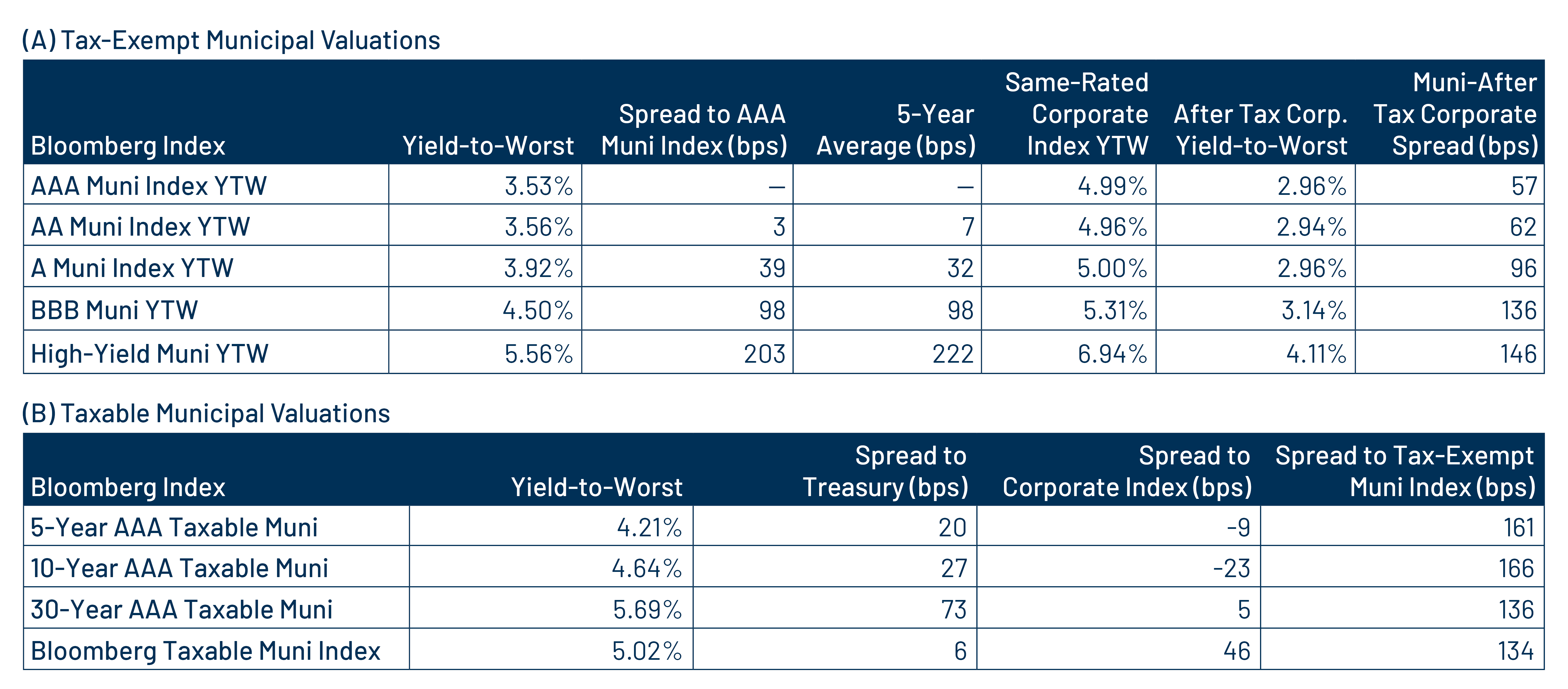
Exhibit 7: Tax-Exempt and Taxable Muni Valuations
Tax-Exempt and Taxable Muni Valuations
Source: Bloomberg, Western Asset. As of 01 May 26. Yield-to-worst (YTW) is the lowest potential yield that can be received on a bond without the issuer actually defaulting. AAA, AA, A, BBB Corporate Indices; After-Tax Yield assumes a top effective tax rate of 40.8%. Taxable Muni Index Corporate comparable used is the Global Corporate Aggregate (ex. BBB) to better align credit quality and duration. Select the image to expand the view.

Western Asset Key Themes for Muni Investors

Theme 1: Municipal taxable-equivalent yields moved lower from recent highs, but remain above historical averages.
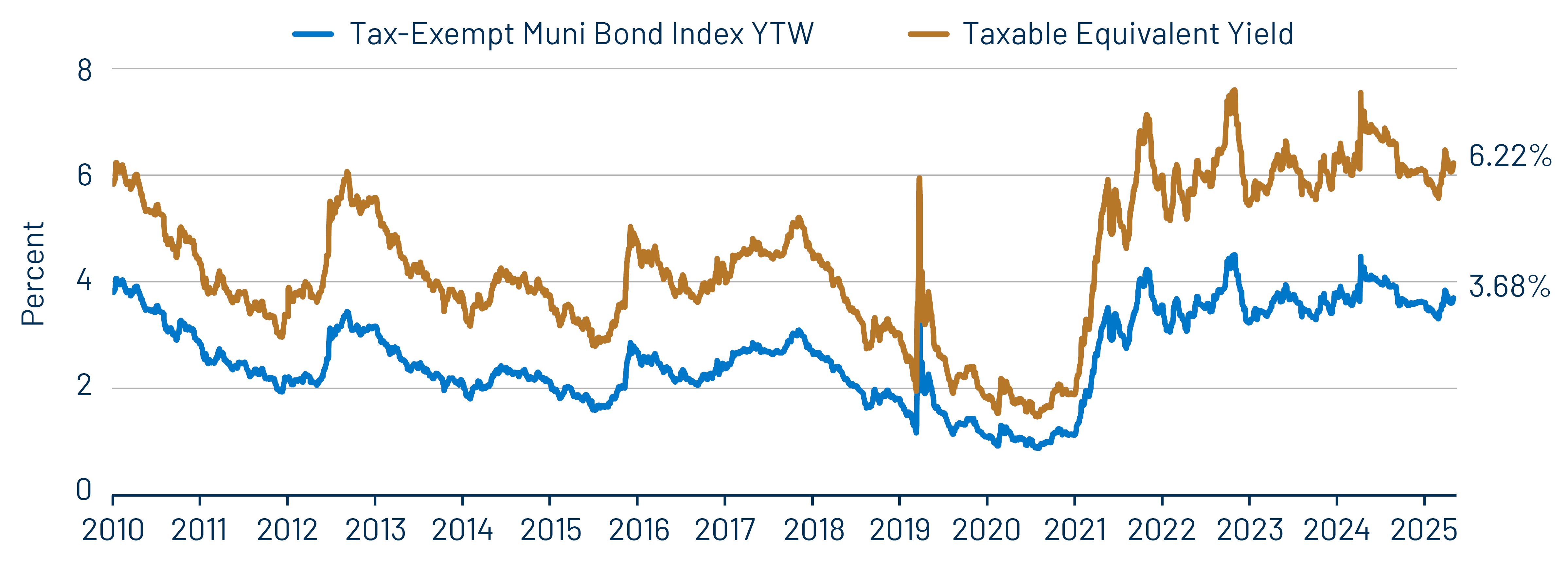
Exhibit 8: Muni and Taxable-Equivalent Muni Yield-to-Worst
Muni and Taxable-Equivalent Muni Yield-to-Worst
Source: Bloomberg, Western Asset. As of 01 May 26. Bloomberg Municipal Bond Index yield considering highest marginal tax rate of 40.8%. Indexes are unmanaged and one cannot directly invest in them. They do not include fees, expenses or sales charges. Past performance is not an indicator or a guarantee of future results. Select the image to expand the view.

Theme 2: Munis offer attractive after-tax yield pickup vs. longer-duration and lower-quality taxable alternatives.
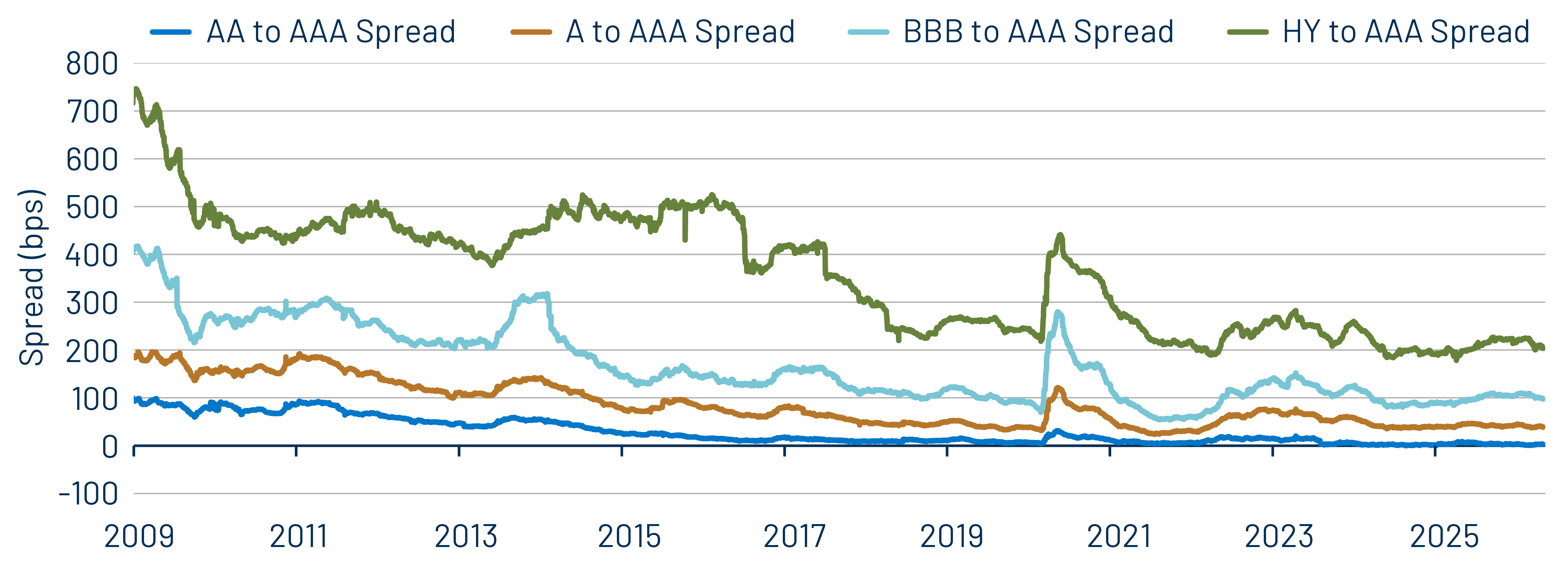
Exhibit 9: AAA Municipal vs. Treasury Yield Curves
AAA Municipal vs. Treasury Yield Curves
Source: Bloomberg, Western Asset. As of 01 May 26. Bloomberg Valuation Service (BVAL) AAA Muni Curve and US On-/Off-the-Run Sovereign Curve. Indexes are unmanaged and one cannot directly invest in them. They do not include fees, expenses or sales charges. Past performance is not an indicator or a guarantee of future results. Select the image to expand the view.

Theme 3: Historically tight municipal credit spreads underscore the importance of credit selection.
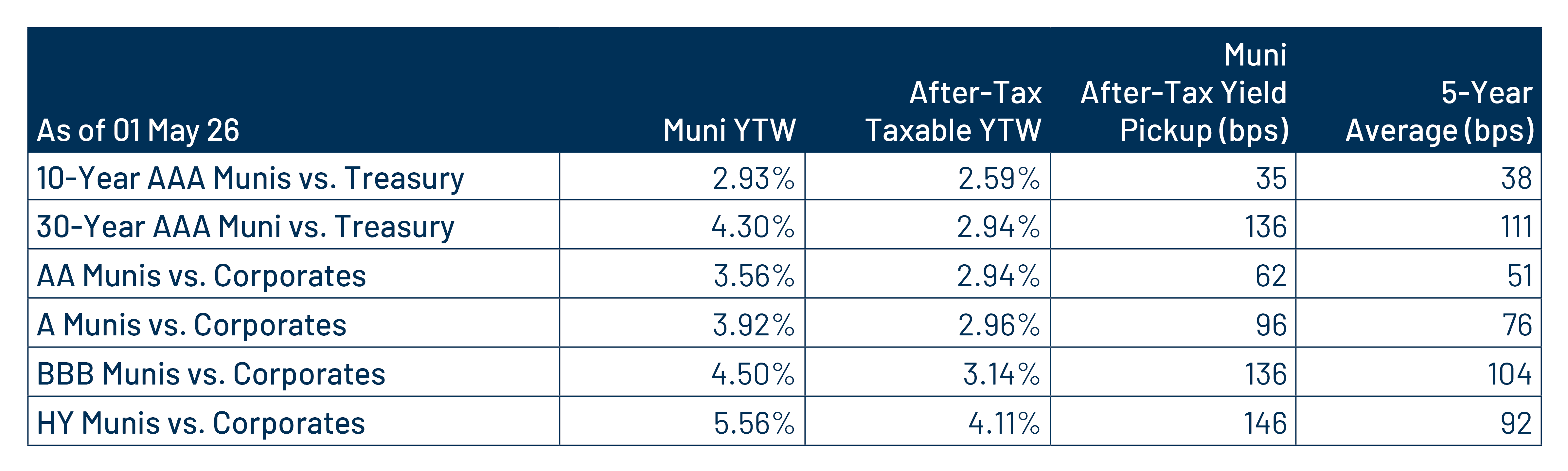
Exhibit 10: Municipal vs. Taxable Fixed-Income Yields by Quality
Municipal vs. Taxable Fixed-Income Yields by Quality
Source: Western Asset, Bloomberg. As of 01 May 26. 10- and 30-Year comparison reflects Bloomberg Valuation Service (BVAL) AAA Muni Curve and US On-/Off-the-Run Sovereign Curve. AA Muni reflects the Bloomberg AA Muni Bond Index. A Muni reflects the Bloomberg A Muni Bond Index. BBB Muni reflects the Bloomberg BBB Muni Bond Index. HY Muni reflects the Bloomberg High Yield Muni Bond Index. AA Corp reflects the Bloomberg AA Corporate Bond Index. A Corp reflects the Bloomberg A Corporate Bond Index. BBB Corp reflects the Bloomberg BBB Corporate Bond Index. After-tax yield considers the top marginal tax rate of 40.8%. Indexes are unmanaged and one cannot directly invest in them. They do not include fees, expenses or sales charges. Past performance is not an indicator or a guarantee of future results. Select the image to expand the view.

© Western Asset Management Company, LLC 2026. The information contained in these materials ("the materials") is intended for the exclusive use of the designated recipient ("the recipient"). This information is proprietary and confidential and may contain commercially sensitive information, and may not be copied, reproduced or republished, in whole or in part, without the prior written consent of Western Asset Management Company ("Western Asset").
Past performance does not predict future returns. These materials should not be deemed to be a prediction or projection of future performance. These materials are intended for investment professionals including professional clients, eligible counterparties, and qualified investors only.
For the Franklin Templeton global-non product disclosures, please click here.
These materials have been produced for illustrative and informational purposes only. These materials contain Western Asset's opinions and beliefs as of the date designated on the materials; these views are subject to change and may not reflect real-time market developments and investment views.
Third party data may be used throughout the materials, and this data is believed to be accurate to the best of Western Asset's knowledge at the time of publication, but cannot be guaranteed. These materials may also contain strategy or product awards or rankings from independent third parties or industry publications which are based on unbiased quantitative and/or qualitative information determined independently by each third party or publication. In some cases, Western Asset may subscribe to these third party's standard industry services or publications. These standard subscriptions and services are available to all asset managers and do not influence rankings or awards in any way.
Investment strategies or products discussed herein may involve a high degree of risk, including the loss of some or all capital. Investments in any products or strategies described in these materials may be volatile, and investors should have the financial ability and willingness to accept such risks.
Unless otherwise noted, investment performance contained in these materials is reflective of a strategy composite. All other strategy data and information included in these materials reflects a representative portfolio which is an account in the composite that Western Asset believes most closely reflects the current portfolio management style of the strategy. Performance is not a consideration in the selection of the representative portfolio. The characteristics of the representative portfolio shown may differ from other accounts in the composite. Information regarding the representative portfolio and the other accounts in the composite are available upon request. Statements in these materials should not be considered investment advice. References, either general or specific, to securities and/or issuers in the materials are for illustrative purposes only and are not intended to be, and should not be interpreted as, recommendation to purchase or sell such securities. Employees and/or clients of Western Asset may have a position in the securities or issuers mentioned.
These materials are not intended to provide, and should not be relied on for, accounting, legal, tax, investment or other advice. The recipient should consult its own counsel, accountant, investment, tax, and any other advisers for this advice, including economic risks and merits, related to making an investment with Western Asset. The recipient is responsible for observing the applicable laws and regulations of their country of residence.
Founded in 1971, Western Asset Management Company is a global fixed-income investment manager with offices in Pasadena, New York, London, Singapore, Tokyo, Melbourne, São Paulo, Hong Kong, and Zürich. Western Asset is a wholly owned subsidiary of Franklin Resources, Inc. but operates autonomously. Western Asset is comprised of six legal entities across the globe, each with distinct regional registrations: Western Asset Management Company, LLC, a registered Investment Adviser with the Securities and Exchange Commission; Western Asset Management Company Ltda. is regulated by Comissão de Valores Mobiliários; Western Asset Management Company Pty Ltd ABN 41 117 767 923 is the holder of the Australian Financial Services License 303160; Western Asset Management Company Pte. Ltd. Co. Reg. No. 200007692R is a holder of a Capital Markets Services License for fund management and regulated by the Monetary Authority of Singapore; Western Asset Management Company Ltd, a registered Financial Instruments Business Operator and regulated by the Financial Services Agency of Japan; and Western Asset Management Company Limited is authorised and regulated by the Financial Conduct Authority ("FCA") (FRN 145930). This communication is intended for distribution to Professional Clients only if deemed to be a financial promotion in the UK as defined by the FCA. This communication may also be intended for certain EEA countries where Western Asset has been granted permission to do so. For the current list of the approved EEA countries please contact Western Asset at +44 (0)20 7422 3000.