
skip navigation
Western Asset Management Company
Blog

Stay up to date on timely topics and market events. Subscribe to our Blog now.

ECONOMY
May 19, 2026

US Consumer Report Card—First Quarter 2026

By Alba Abourjeili, CFA

Stay up to date on timely topics and market events. Subscribe to our Blog now.

Overall Score: B-
Trend: Stable
The US consumer score fell to a B- in the first quarter of 2026, while the quarterly trend remains stable. The labor market rebounded from softness earlier in the year and real spending improved from a weak Q4. Real income growth deteriorated further. Balance sheets, net worth and credit performance all remained strong, benefiting from a resilient consumer tied to strength in high-income households. However, consumer sentiment continues to remain weak, diverging between low-income and high-income households.

We view the US consumer as weaker now than at the beginning of the year. In addition to real income growth cooling, inflationary pressures due to higher energy prices more than offset the higher tax refund tailwind that has helped spending and consumer performance. We expect spending to soften in the upcoming quarter as inflationary pressures pinch consumers with less financial flexibility.

The current score of B- (62%) remains well above the average score of C+ (55%) seen from 2010 to 2019. The ongoing cooling from peak pandemic-era stimulus suggests the US economy is gradually returning to its longer-term trend.
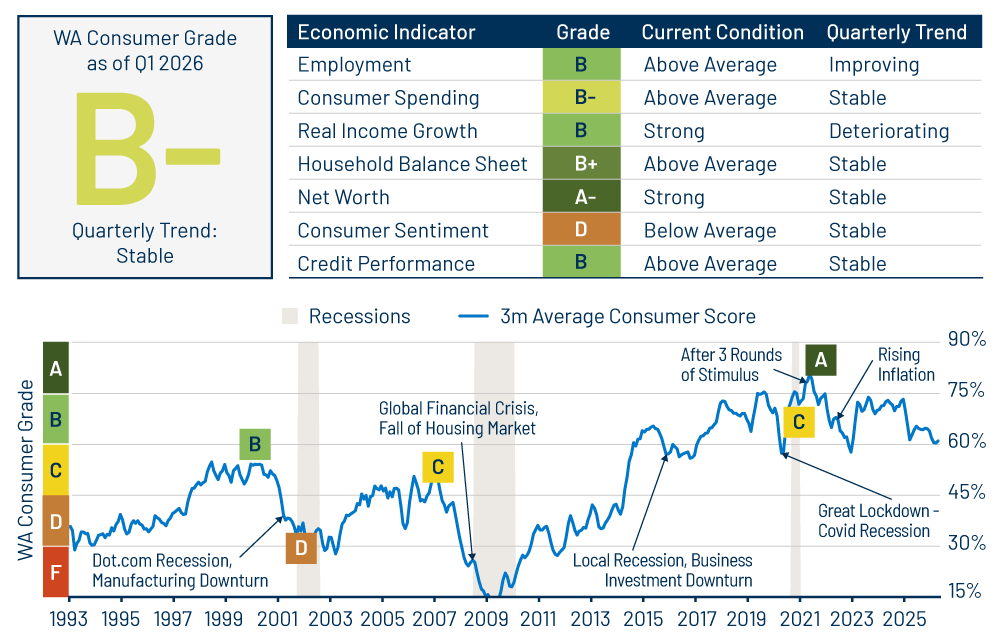
Exhibit 1: US Consumer Report Card—First Quarter 2026
US Consumer Report Card—First Quarter 2026
Source: Bureau of Economic Analysis, Federal Reserve Bank of New York, Federal Reserve Bank of St. Louis, Western Asset. As of 31 Mar 26. The Western Asset Consumer Grade rating is based on a proprietary scoring system. We analyze economic variables that are most impactful toward consumer health (the unemployment rate, consumer spending, real income growth, the debt service coverage ratio, net worth, consumer sentiment and credit card delinquencies). For each variable time series, we rank the most recent print versus historical ranges and use a weighted average across these variables to come up with a score. We then map the score to a grade according to the following scale: A= 75-100; B= 60-75; C= 45-60; D= 30-45; F= <30. Select the image to expand the view.

Employment: B
Trend: Improving
The labor market appears to have stabilized. Employment shows signs of resilience as the nonfarm payrolls report showed notable improvement in March and April coming in above expectations. The unemployment rate also fell to 4.3%, with little movement in hiring or the layoff rate. Looking ahead, risks are skewed toward further labor market weakening if higher energy prices weigh on consumer spending and overall growth.

Consumer Spending: B-
Trend: Stable
Real consumer spending grew at a moderate pace in March, improving 1Q26 results after a soft 4Q25. Real Personal Consumption Expenditures (PCE) growth saw a healthy increase of 2.1% year-over-year. Spending on gasoline saw a meaningful rise in March, weighing most on low- and middle-income households. Spending headwinds from higher inflation due to increased energy prices are expected to weigh on spending growth for the rest of the year.

Real Income Growth: B
Trend: Deteriorating
Real disposable income growth continued to decline in the first quarter and remains soft at 1.3%, on a 6-month annualized basis. The boost from higher tax refunds and lower tax payments from the One Big Beautiful Bill Act was offset by an increase in capital gains tax payments, resulting in a net limited boost to household income. Higher energy prices are expected to erode household spending power, especially among low-income households that spend a larger portion of their disposable income on energy expenses. Real income growth is expected to continue to be soft the rest of the year.

Household Balance Sheets: B+
Trend: Stable
Consumer credit rose modestly in Q1 at an annualized rate of 3.5%, offset by a seasonal decline in credit card balances. Household leverage and debt servicing costs as a percentage of disposable income increased a touch in late 2025 but remain low by historical standards. The lock-in effect of low mortgage rates on households continues to outpace the increased financing costs seen over the past few years.

Wealth/Net Worth: A-
Trend: Stable
The net worth to disposable personal income ratio remains near all-time highs. Although equity valuations fell in the first quarter, they rebounded in April. Higher net worth households continue to reflect most of the gains. The savings rate dropped to 3.6% in March, led by a spike in energy prices, which is the lowest level since 2022. Liquid deposits have increased across income cohorts for most of 2025 and remain elevated in 1Q26 relative to pre-pandemic levels.

Consumer Sentiment: D
Trend: Stable
The University of Michigan and Conference Board Consumer sentiment indices both declined further in Q1 led by middle- and low-income households expressing concern about rising gas prices. The sentiment index scores rose for higher-income households, reflecting a rise in stock prices. Both surveys hover close to post-Covid lows and are expected to remain volatile.

Credit Performance: B
Trend: Stable
Credit card performance has been stable for the past three quarters, which is an indicator of higher-income consumers supporting credit card spending. However, it also masks weaker trends among households with less financial flexibility. Moreover, lower-income consumers may be relying on credit card alternatives such as buy-now-pay-later (BNPL) services as surveys show more consumers now rely on BNPL for everyday purchases.

Higher energy prices have dampened the impact of higher tax refunds on consumer performance, which was initially expected to reverse some of the deterioration seen in 2025. Non-prime auto loans have seen a very minor seasonal improvement in performance, which is likely to reverse in upcoming months. The prime consumer has shown a bit more improvement, as seen in the performance of prime auto loans. Federal student loan delinquencies improved from 4Q25 but remain slightly more elevated than pre-pandemic. Wage garnishment for loans in default will resume in the summer and could impact credit scores, whereas the impact on other credit products remains to be seen.

We continue to favor focusing on high-quality consumer credit, such as prime auto and private student loans as well as consumer sectors related to housing. In addition, we lean toward positions higher up in the capital structure, and we remain cautious about subprime consumer assets.

Background on Methodology

Our methodology rationale for creating the US Consumer Report Card first involves ranking economic indicators versus a historical dataset, with tracked periodic changes going back to 1990. We then calculate a weighted average score for each month. Assigned weights range from a high of 23% to a low of 10%. Employment, consumer spending and real income growth make up 60%, while the remaining indicators comprise 40%. The consumer score is mapped against letter grades, normalized for historical experience.

© Western Asset Management Company, LLC 2026. The information contained in these materials ("the materials") is intended for the exclusive use of the designated recipient ("the recipient"). This information is proprietary and confidential and may contain commercially sensitive information, and may not be copied, reproduced or republished, in whole or in part, without the prior written consent of Western Asset Management Company ("Western Asset").
Past performance does not predict future returns. These materials should not be deemed to be a prediction or projection of future performance. These materials are intended for investment professionals including professional clients, eligible counterparties, and qualified investors only.
For the Franklin Templeton global-non product disclosures, please click here.
These materials have been produced for illustrative and informational purposes only. These materials contain Western Asset's opinions and beliefs as of the date designated on the materials; these views are subject to change and may not reflect real-time market developments and investment views.
Third party data may be used throughout the materials, and this data is believed to be accurate to the best of Western Asset's knowledge at the time of publication, but cannot be guaranteed. These materials may also contain strategy or product awards or rankings from independent third parties or industry publications which are based on unbiased quantitative and/or qualitative information determined independently by each third party or publication. In some cases, Western Asset may subscribe to these third party's standard industry services or publications. These standard subscriptions and services are available to all asset managers and do not influence rankings or awards in any way.
Investment strategies or products discussed herein may involve a high degree of risk, including the loss of some or all capital. Investments in any products or strategies described in these materials may be volatile, and investors should have the financial ability and willingness to accept such risks.
Unless otherwise noted, investment performance contained in these materials is reflective of a strategy composite. All other strategy data and information included in these materials reflects a representative portfolio which is an account in the composite that Western Asset believes most closely reflects the current portfolio management style of the strategy. Performance is not a consideration in the selection of the representative portfolio. The characteristics of the representative portfolio shown may differ from other accounts in the composite. Information regarding the representative portfolio and the other accounts in the composite are available upon request. Statements in these materials should not be considered investment advice. References, either general or specific, to securities and/or issuers in the materials are for illustrative purposes only and are not intended to be, and should not be interpreted as, recommendation to purchase or sell such securities. Employees and/or clients of Western Asset may have a position in the securities or issuers mentioned.
These materials are not intended to provide, and should not be relied on for, accounting, legal, tax, investment or other advice. The recipient should consult its own counsel, accountant, investment, tax, and any other advisers for this advice, including economic risks and merits, related to making an investment with Western Asset. The recipient is responsible for observing the applicable laws and regulations of their country of residence.
Founded in 1971, Western Asset Management Company is a global fixed-income investment manager with offices in Pasadena, New York, London, Singapore, Tokyo, Melbourne, São Paulo, Hong Kong, and Zürich. Western Asset is a wholly owned subsidiary of Franklin Resources, Inc. but operates autonomously. Western Asset is comprised of six legal entities across the globe, each with distinct regional registrations: Western Asset Management Company, LLC, a registered Investment Adviser with the Securities and Exchange Commission; Western Asset Management Company Ltda. is regulated by Comissão de Valores Mobiliários; Western Asset Management Company Pty Ltd ABN 41 117 767 923 is the holder of the Australian Financial Services License 303160; Western Asset Management Company Pte. Ltd. Co. Reg. No. 200007692R is a holder of a Capital Markets Services License for fund management and regulated by the Monetary Authority of Singapore; Western Asset Management Company Ltd, a registered Financial Instruments Business Operator and regulated by the Financial Services Agency of Japan; and Western Asset Management Company Limited is authorised and regulated by the Financial Conduct Authority ("FCA") (FRN 145930). This communication is intended for distribution to Professional Clients only if deemed to be a financial promotion in the UK as defined by the FCA. This communication may also be intended for certain EEA countries where Western Asset has been granted permission to do so. For the current list of the approved EEA countries please contact Western Asset at +44 (0)20 7422 3000.