
skip navigation
Western Asset Management Company
Blog

Stay up to date on timely topics and market events. Subscribe to our Blog now.

ECONOMY
May 08, 2026

Goldilocks Jobs Data in April

By Michael J. Bazdarich, PhD

Stay up to date on timely topics and market events. Subscribe to our Blog now.

Private-sector payrolls rose by 123,000 in April, with only a slight -15,000 revision to March estimates, according to data released today by the Labor Department. Average workweeks increased, while average hourly earnings rose at just a 1.9% monthly annualized rate. These data show job growth substantial enough to quash any recession fears out there, while wage growth is at rates that won’t raise any inflation hackles. In other words, today’s data should be encouraging to stock and bond markets alike.

No, the report wasn’t a perfect testament to the economy. Health care and social assistance continue to account for a large share of the reported job growth, as shown in Exhibit 1, and the bulk of the gains elsewhere came from a handful of sectors: building material stores, big-box retailers, courier and messenger services, professional services, entertainment and restaurants.
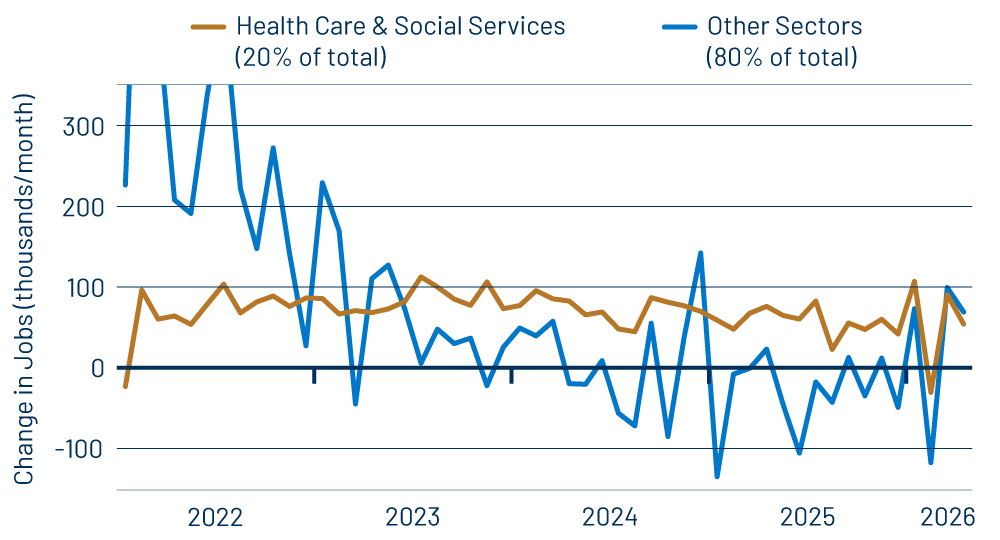
Exhibit 1: Private-Sector Job Growth—Health Care vs. Other Sectors
Private-Sector Job Growth—Health Care vs. Other Sectors
Source: Bureau of Labor Statistics. As of 30 Apr 26. Select the image to expand the view.

The fact remains, however, that the overall performance of the non-health-care economy has been markedly better so far this year than what we saw in 2024 and 2025, this despite a prolonged government shutdown and the outbreak of hostilities with Iran. Similarly, it is encouraging to see the bounces in job growth reported for the sectors listed here, as these had been languishing over the preceding two years.

Furthermore, the underlying details of the report were also favorable, as private-sector production jobs rose even more strongly, by 154,000. In other words, employers are trimming administrative staff, even while adding line-worker jobs, which augurs well for production growth going forward. This trend has been in evidence since last summer.

The increase in average hourly wages was especially small in April. However, it is also the case that average wages have been moderating for quite some time. Over the last six months, average hourly wages have risen at an annualized rate of just over 3%. We estimate that a rate of 3.5% or less is consistent with the 2.0% inflation target of the Federal Reserve (Fed). So, inflation above 2% recently and in months to come will likely be due to the effects of tariffs and military conflict, not generated from within the domestic economy. In other words, there is nothing in the labor market trends to trouble the Fed.

In past posts, we have mentioned a rebound in manufacturing activity occurring since late 2024, spurred in part by strong growth in business capital spending. This burst has so far not generated a huge number of jobs, but it has arrested the preceding downward trend in factory jobs, and it has also led to increased work hours on factory production lines. Both these swings are on display in Exhibit 2.
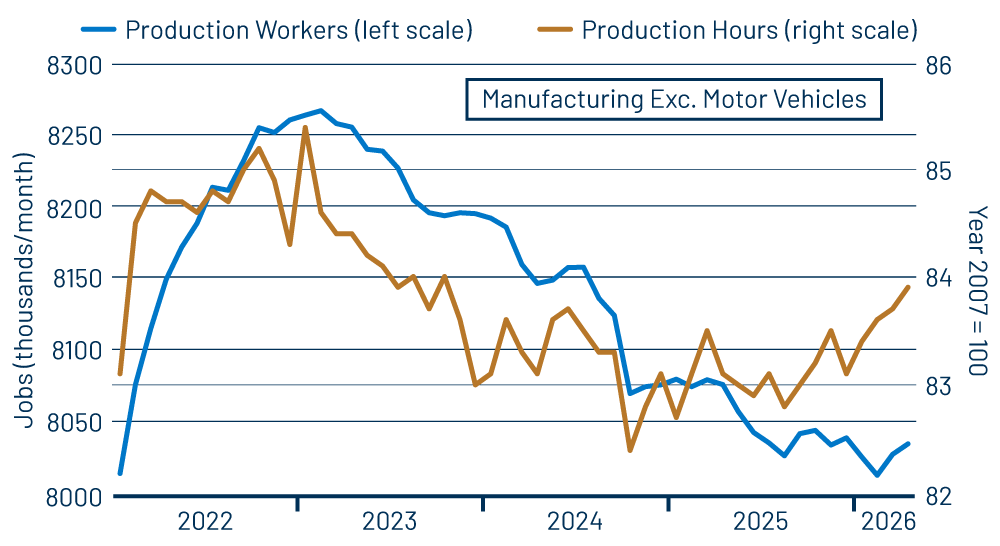
Exhibit 2: Factory Production Workers and Work Hours
Factory Production Workers and Work Hours
Source: Bureau of Labor Statistics. As of 30 Apr 26. Select the image to expand the view.

The CAPEX boom and factory revival have been credited to AI and the construction of data centers. This has surely been a significant factor behind the rebounds. However, we are also seeing production of textile products, metals, metal products, industrial machinery and electrical equipment, as well as high-tech equipment. So, the manufacturing rebound is well spread out, not confined to high-tech.

Finally, while the establishment survey data (payroll jobs) show improvement over recent months, household survey data have moved in the other direction. No, the unemployment rate has not risen, but the civilian labor force and civilian employment have both been declining since December. This is exactly the same period over which payroll job growth has been improving. Employment data from the two surveys often move disparately, and when that occurs, we are inclined to pay more attention to the payroll data (which is why these posts focus almost exclusively on payroll jobs).

So, while household survey (civilian) employment has softened recently, that has not led to any increase in the unemployment rate (which is what the household survey is constructed to cover), and, meanwhile, establishment survey (payroll) data show a modest but noticeable improvement in recent months, without generating any inflationary pressures. Goldilocks indeed!

© Western Asset Management Company, LLC 2026. The information contained in these materials ("the materials") is intended for the exclusive use of the designated recipient ("the recipient"). This information is proprietary and confidential and may contain commercially sensitive information, and may not be copied, reproduced or republished, in whole or in part, without the prior written consent of Western Asset Management Company ("Western Asset").
Past performance does not predict future returns. These materials should not be deemed to be a prediction or projection of future performance. These materials are intended for investment professionals including professional clients, eligible counterparties, and qualified investors only.
For the Franklin Templeton global-non product disclosures, please click here.
These materials have been produced for illustrative and informational purposes only. These materials contain Western Asset's opinions and beliefs as of the date designated on the materials; these views are subject to change and may not reflect real-time market developments and investment views.
Third party data may be used throughout the materials, and this data is believed to be accurate to the best of Western Asset's knowledge at the time of publication, but cannot be guaranteed. These materials may also contain strategy or product awards or rankings from independent third parties or industry publications which are based on unbiased quantitative and/or qualitative information determined independently by each third party or publication. In some cases, Western Asset may subscribe to these third party's standard industry services or publications. These standard subscriptions and services are available to all asset managers and do not influence rankings or awards in any way.
Investment strategies or products discussed herein may involve a high degree of risk, including the loss of some or all capital. Investments in any products or strategies described in these materials may be volatile, and investors should have the financial ability and willingness to accept such risks.
Unless otherwise noted, investment performance contained in these materials is reflective of a strategy composite. All other strategy data and information included in these materials reflects a representative portfolio which is an account in the composite that Western Asset believes most closely reflects the current portfolio management style of the strategy. Performance is not a consideration in the selection of the representative portfolio. The characteristics of the representative portfolio shown may differ from other accounts in the composite. Information regarding the representative portfolio and the other accounts in the composite are available upon request. Statements in these materials should not be considered investment advice. References, either general or specific, to securities and/or issuers in the materials are for illustrative purposes only and are not intended to be, and should not be interpreted as, recommendation to purchase or sell such securities. Employees and/or clients of Western Asset may have a position in the securities or issuers mentioned.
These materials are not intended to provide, and should not be relied on for, accounting, legal, tax, investment or other advice. The recipient should consult its own counsel, accountant, investment, tax, and any other advisers for this advice, including economic risks and merits, related to making an investment with Western Asset. The recipient is responsible for observing the applicable laws and regulations of their country of residence.
Founded in 1971, Western Asset Management Company is a global fixed-income investment manager with offices in Pasadena, New York, London, Singapore, Tokyo, Melbourne, São Paulo, Hong Kong, and Zürich. Western Asset is a wholly owned subsidiary of Franklin Resources, Inc. but operates autonomously. Western Asset is comprised of six legal entities across the globe, each with distinct regional registrations: Western Asset Management Company, LLC, a registered Investment Adviser with the Securities and Exchange Commission; Western Asset Management Company Ltda. is regulated by Comissão de Valores Mobiliários; Western Asset Management Company Pty Ltd ABN 41 117 767 923 is the holder of the Australian Financial Services License 303160; Western Asset Management Company Pte. Ltd. Co. Reg. No. 200007692R is a holder of a Capital Markets Services License for fund management and regulated by the Monetary Authority of Singapore; Western Asset Management Company Ltd, a registered Financial Instruments Business Operator and regulated by the Financial Services Agency of Japan; and Western Asset Management Company Limited is authorised and regulated by the Financial Conduct Authority ("FCA") (FRN 145930). This communication is intended for distribution to Professional Clients only if deemed to be a financial promotion in the UK as defined by the FCA. This communication may also be intended for certain EEA countries where Western Asset has been granted permission to do so. For the current list of the approved EEA countries please contact Western Asset at +44 (0)20 7422 3000.