
skip navigation
Western Asset Management Company
Blog

Stay up to date on timely topics and market events. Subscribe to our Blog now.

MARKETS
June 24, 2026

EM backdrop supportive, but no clear inflection point

By Wilfred Wong, CFA

Stay up to date on timely topics and market events. Subscribe to our Blog now.

Emerging markets (EM) have benefited from a meaningful shift in sentiment over recent weeks. The dominant macro catalyst has been the prospect of a US-Iran peace agreement and the expected reopening of the Strait of Hormuz. Oil prices have retraced more than 30% from their wartime peak. At the same time, US equities and credit spreads have largely priced in a favorable geopolitical outcome.

For EM investors, the peace dividend is clearly positive. Lower oil prices reduce pressure on current accounts, fiscal subsidies and consumer purchasing power across many oil-importing economies. They also ease some of the immediate pressure on central banks that had been forced to respond to the inflationary consequences of higher energy prices. The risk rally has been particularly helpful for high-yield and frontier market sovereigns, where spreads had widened during the earlier phase of the conflict.

That said, one should be careful about extrapolating the market reaction too far. There is an important distinction between a financial market repricing and a real economy normalization. Markets can quickly discount a peace agreement, but physical trade flows, inventories and supply chains take longer to repair. A reopening of the Strait of Hormuz would be a major step forward, but shipping companies, insurers and commodity traders are unlikely to immediately return to pre-conflict operating behavior. Energy inventories also need time to rebuild, and disrupted regional infrastructure, including gas-related facilities, may take time to fully recover. That matters most for inflation.

Spot oil prices have fallen, but the earlier shock has not yet fully passed through the data. Higher freight costs, disrupted shipping patterns, lower inventories and prior fuel-price increases are still likely to affect consumer prices with a lag. The impact will vary by country, but oil-importing EM regions in Asia and parts of Europe remain particularly exposed. Food, transport, electricity and administered prices often adjust gradually, and governments may also need to recalibrate subsidies or regulated prices after the fact.

As a result, we do not think we are yet at a clean disinflation inflection point. Our base case is that inflation data in several EM regions may continue to move higher over the next three to six months before stabilizing. More favorable base effects should eventually help the disinflation process, but that is more likely to become visible next year than immediately.

Rates markets are already reflecting this tension. US Treasury yields remain elevated despite stronger risk sentiment, partly because markets are still focused on fiscal concerns, supply and sticky inflation. Across various EM regions, local rates have repriced higher as central banks account for higher expected inflation and, in some cases, the need to defend currencies. Several EM central banks have adopted a more hawkish tone, and some have already tightened policy to preserve credibility.

For hard-currency EM debt, valuations are no longer as compelling as they were earlier in the shock. Spreads have tightened, frontier market bonds have performed well and the market overall has already priced a meaningful improvement in the geopolitical backdrop. The EM asset class still offers attractive carry, but future returns are likely to depend more on security selection and country fundamentals than broad beta.
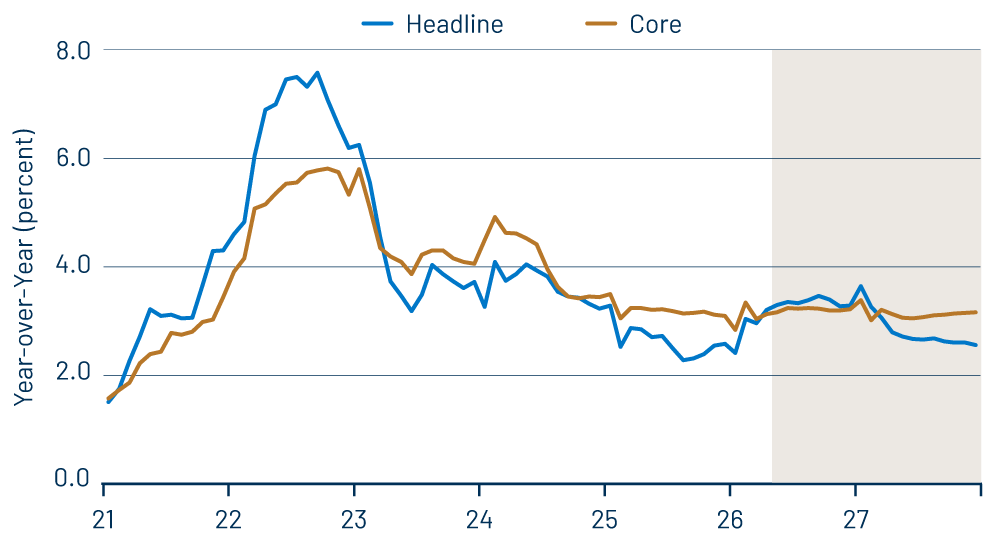
Exhibit 1: EM Inflation—Headline and Core Consumer Prices
EM Inflation—Headline and Core Consumer Prices
Source: National statistical agencies, J.P. Morgan. As of 22 Jun 26. Shaded area is J.P. Morgan forecast. Select the image to expand the view.

Local markets may offer a more balanced opportunity set. We expect EM currencies to remain broadly range-bound versus the US dollar rather than enter a sustained appreciation trend. The dollar has not broken decisively lower, and US rates remain a constraint. However, many EM regions still offer attractive nominal and real yields. If volatility continues to decline and geopolitical risk recedes, carry trades should return to the forefront.

Overall, our view is that the backdrop for EM is constructive, but not without risk. The sector has strong technical support from limited issuance and continued inflows, while lower oil prices reduce an important macro headwind. But the market may be moving faster than the real economy. Until inflation data confirms a turn and trade flows normalize more fully, we would favor carry, selectivity and countries with credible policy frameworks over simply chasing the relief rally.

© Western Asset Management Company, LLC 2026. The information contained in these materials ("the materials") is intended for the exclusive use of the designated recipient ("the recipient"). This information is proprietary and confidential and may contain commercially sensitive information, and may not be copied, reproduced or republished, in whole or in part, without the prior written consent of Western Asset Management Company ("Western Asset").
Past performance does not predict future returns. These materials should not be deemed to be a prediction or projection of future performance. These materials are intended for investment professionals including professional clients, eligible counterparties, and qualified investors only.
For the Franklin Templeton global-non product disclosures, please click here.
These materials have been produced for illustrative and informational purposes only. These materials contain Western Asset's opinions and beliefs as of the date designated on the materials; these views are subject to change and may not reflect real-time market developments and investment views.
Third party data may be used throughout the materials, and this data is believed to be accurate to the best of Western Asset's knowledge at the time of publication, but cannot be guaranteed. These materials may also contain strategy or product awards or rankings from independent third parties or industry publications which are based on unbiased quantitative and/or qualitative information determined independently by each third party or publication. In some cases, Western Asset may subscribe to these third party's standard industry services or publications. These standard subscriptions and services are available to all asset managers and do not influence rankings or awards in any way.
Investment strategies or products discussed herein may involve a high degree of risk, including the loss of some or all capital. Investments in any products or strategies described in these materials may be volatile, and investors should have the financial ability and willingness to accept such risks.
Unless otherwise noted, investment performance contained in these materials is reflective of a strategy composite. All other strategy data and information included in these materials reflects a representative portfolio which is an account in the composite that Western Asset believes most closely reflects the current portfolio management style of the strategy. Performance is not a consideration in the selection of the representative portfolio. The characteristics of the representative portfolio shown may differ from other accounts in the composite. Information regarding the representative portfolio and the other accounts in the composite are available upon request. Statements in these materials should not be considered investment advice. References, either general or specific, to securities and/or issuers in the materials are for illustrative purposes only and are not intended to be, and should not be interpreted as, recommendation to purchase or sell such securities. Employees and/or clients of Western Asset may have a position in the securities or issuers mentioned.
These materials are not intended to provide, and should not be relied on for, accounting, legal, tax, investment or other advice. The recipient should consult its own counsel, accountant, investment, tax, and any other advisers for this advice, including economic risks and merits, related to making an investment with Western Asset. The recipient is responsible for observing the applicable laws and regulations of their country of residence.
Founded in 1971, Western Asset Management Company is a global fixed-income investment manager with offices in Pasadena, New York, London, Singapore, Tokyo, Melbourne, São Paulo, Hong Kong, and Zürich. Western Asset is a wholly owned subsidiary of Franklin Resources, Inc. but operates autonomously. Western Asset is comprised of six legal entities across the globe, each with distinct regional registrations: Western Asset Management Company, LLC, a registered Investment Adviser with the Securities and Exchange Commission; Western Asset Management Company Ltda. is regulated by Comissão de Valores Mobiliários; Western Asset Management Company Pty Ltd ABN 41 117 767 923 is the holder of the Australian Financial Services License 303160; Western Asset Management Company Pte. Ltd. Co. Reg. No. 200007692R is a holder of a Capital Markets Services License for fund management and regulated by the Monetary Authority of Singapore; Western Asset Management Company Ltd, a registered Financial Instruments Business Operator and regulated by the Financial Services Agency of Japan; and Western Asset Management Company Limited is authorised and regulated by the Financial Conduct Authority ("FCA") (FRN 145930). This communication is intended for distribution to Professional Clients only if deemed to be a financial promotion in the UK as defined by the FCA. This communication may also be intended for certain EEA countries where Western Asset has been granted permission to do so. For the current list of the approved EEA countries please contact Western Asset at +44 (0)20 7422 3000.