skip navigation
Western Asset Management Company
Blog

Stay up to date on timely topics and market events. Subscribe to our Blog now.

ECONOMY
February 27, 2026

December Construction Flat, but Trends Down Across the Board

By Michael J. Bazdarich, PhD

Stay up to date on timely topics and market events. Subscribe to our Blog now.

Construction spending rose 0.3% in nominal terms in December. After allowing for rising construction costs, real construction spending was likely flat. This is a slight improvement from the declining trend that we have seen across the board in real construction activity since early 2024, as Exhibit 1 makes clear.
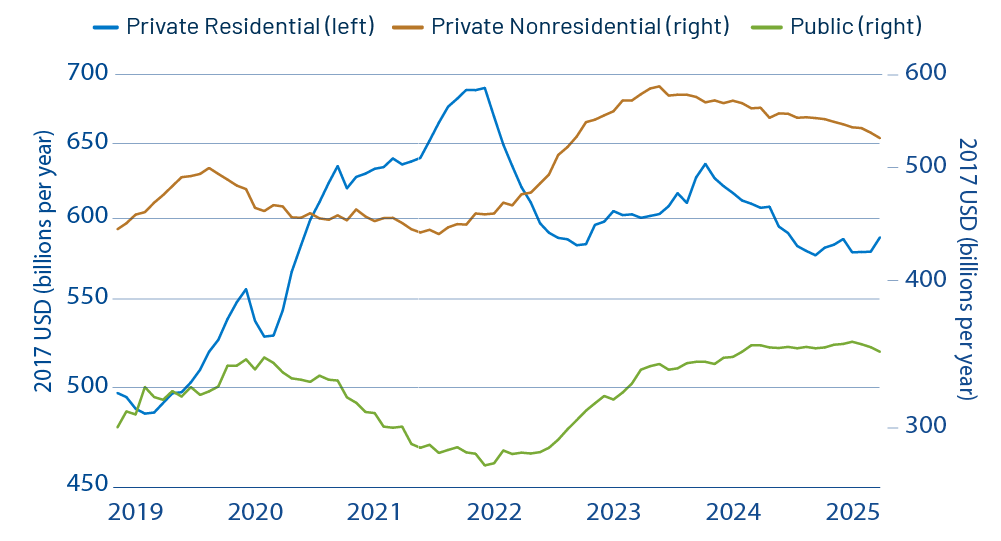
Exhibit 1: Estimated Real Construction Spending by Type
Estimated Real Construction Spending by Type
Source: Census Bureau, Bureau of Economic Analysis, Western Asset. As of 31 Dec 25. Monthly price data interpolated from quarterly data. Select the image to expand the view.

In that chart, we split construction activity into three major components: residential (housing), nonresidential (business investment) and public (government). We’ll discuss each.

Since the pandemic, real construction activity for such traditional sectors as office, retail, communications, lodging, amusements and even transportation (airports, etc.) has been in relentless decline. Over 2022 and 2023, government programs (the CHIPS Act, etc.) unleashed a sharp expansion in construction of manufacturing capacity, and that was abetted by explosive growth in data center construction (AI). Those booms offset ongoing declines elsewhere.

However, manufacturing construction peaked early in 2024. While it remains at elevated levels, the ongoing declines in other nonresidential construction sectors have reimposed a decline in overall nonres construction. Data center activity continues to rise, but it is just not large enough to carry the nonres sector by itself. Meanwhile, government construction rose in tandem with the boom in manufacturing construction and has similarly gone flat since early 2024.
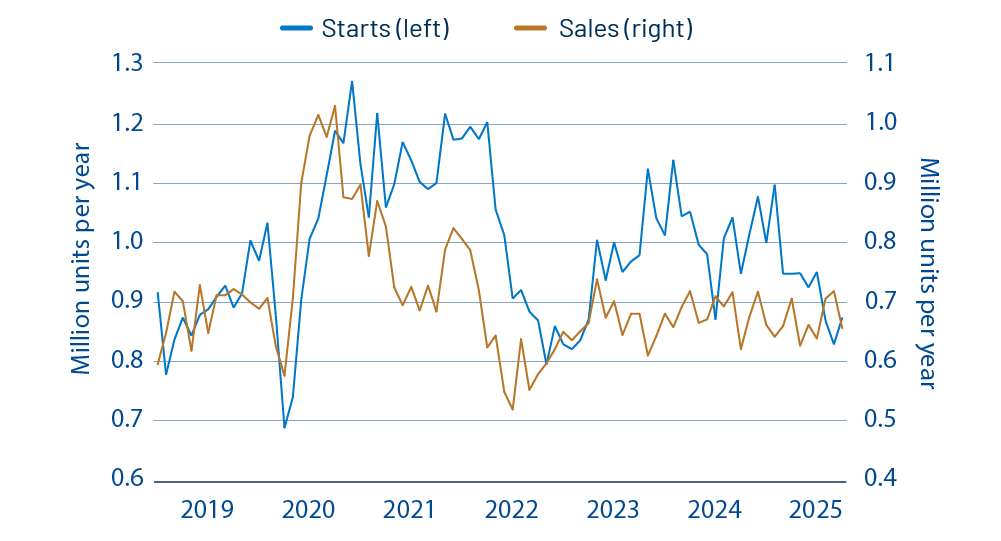
Exhibit 2: Sales and Starts of New, Single-Family Homes
Sales and Starts of New, Single-Family Homes
Source: Census Bureau. As of 31 Dec 25. Select the image to expand the view.

Which brings us to housing. The pandemic and its after-effects are dominant undercurrents here as well. The Covid-induced flight to exurbia drove a boom in new-home activity, with prices jumping in response. Sharply rising mortgage rates following Federal Reserve tightening in 2022 combined with the higher prices to vastly reduce affordability of new homes. Yet, homebuilders continued at elevated construction levels into 2022, despite plunging new-home sales from late-2020 on.

We have been dealing with a glut of new homes ever since. The good news is that this glut finally seems to be getting absorbed. New-home sales have not bounced meaningfully, but construction of new homes has finally been reined in to levels consistent with current demand, as seen in Exhibit 2, so that inventories of new homes are stabilizing. Granted, new-home inventories remain at very high levels, and housing starts may have to fall further to actually reduce inventories, rather than merely stabilize them.

Still, first things first. It is encouraging to see housing start levels more in line with new-home sales. Meanwhile, residential construction cost inflation slowed dramatically in 2025 and actually went negative in 4Q25. If that leads to further declines in new-home prices, a resulting rise in new-home sales would reduce the chances of further declines in residential construction activity.

Another interesting development in the new-home market is that buyers are shifting their focus to homes that are already completed. Prior to 2020, homes under construction or not yet started invariably accounted for more than 60% of total new-home sales. The pandemic changed that, and sales of non-completed homes have been declining ever since. Currently, sales of completed homes account for more than 60% of new-home sales, a total switch from pre-2020s norms.

It would seem that with housing affordability such an issue presently, buyers are understandably reluctant to commit to a home that is not yet available for occupancy. This shift should not materially affect builders’ profit margins, but it might make them more hesitant to ramp up construction in anticipation of strong demand.

Bottom line, we think Covid factors continue to weigh on construction activity. Until manufacturing output is booming more strongly than recently, we are not likely to see further increases in manufacturing construction, and other nonres sectors are still in post-Covid decline mode. Public construction likely will be constrained by government budget problems. Housing construction could stabilize in the months to come, but it is unlikely to rise meaningfully until both mortgage rates and new-home prices are substantially lower than current levels. If the US economy is going to grow strongly this year and next, that has to come from the manufacturing and services sectors, not from construction.

© Western Asset Management Company, LLC 2026. The information contained in these materials ("the materials") is intended for the exclusive use of the designated recipient ("the recipient"). This information is proprietary and confidential and may contain commercially sensitive information, and may not be copied, reproduced or republished, in whole or in part, without the prior written consent of Western Asset Management Company ("Western Asset").
Past performance does not predict future returns. These materials should not be deemed to be a prediction or projection of future performance. These materials are intended for investment professionals including professional clients, eligible counterparties, and qualified investors only.
For the Franklin Templeton global-non product disclosures, please click here.
These materials have been produced for illustrative and informational purposes only. These materials contain Western Asset's opinions and beliefs as of the date designated on the materials; these views are subject to change and may not reflect real-time market developments and investment views.
Third party data may be used throughout the materials, and this data is believed to be accurate to the best of Western Asset's knowledge at the time of publication, but cannot be guaranteed. These materials may also contain strategy or product awards or rankings from independent third parties or industry publications which are based on unbiased quantitative and/or qualitative information determined independently by each third party or publication. In some cases, Western Asset may subscribe to these third party's standard industry services or publications. These standard subscriptions and services are available to all asset managers and do not influence rankings or awards in any way.
Investment strategies or products discussed herein may involve a high degree of risk, including the loss of some or all capital. Investments in any products or strategies described in these materials may be volatile, and investors should have the financial ability and willingness to accept such risks.
Unless otherwise noted, investment performance contained in these materials is reflective of a strategy composite. All other strategy data and information included in these materials reflects a representative portfolio which is an account in the composite that Western Asset believes most closely reflects the current portfolio management style of the strategy. Performance is not a consideration in the selection of the representative portfolio. The characteristics of the representative portfolio shown may differ from other accounts in the composite. Information regarding the representative portfolio and the other accounts in the composite are available upon request. Statements in these materials should not be considered investment advice. References, either general or specific, to securities and/or issuers in the materials are for illustrative purposes only and are not intended to be, and should not be interpreted as, recommendation to purchase or sell such securities. Employees and/or clients of Western Asset may have a position in the securities or issuers mentioned.
These materials are not intended to provide, and should not be relied on for, accounting, legal, tax, investment or other advice. The recipient should consult its own counsel, accountant, investment, tax, and any other advisers for this advice, including economic risks and merits, related to making an investment with Western Asset. The recipient is responsible for observing the applicable laws and regulations of their country of residence.
Founded in 1971, Western Asset Management Company is a global fixed-income investment manager with offices in Pasadena, New York, London, Singapore, Tokyo, Melbourne, São Paulo, Hong Kong, and Zürich. Western Asset is a wholly owned subsidiary of Franklin Resources, Inc. but operates autonomously. Western Asset is comprised of six legal entities across the globe, each with distinct regional registrations: Western Asset Management Company, LLC, a registered Investment Adviser with the Securities and Exchange Commission; Western Asset Management Company Ltda. is regulated by Comissão de Valores Mobiliários; Western Asset Management Company Pty Ltd ABN 41 117 767 923 is the holder of the Australian Financial Services License 303160; Western Asset Management Company Pte. Ltd. Co. Reg. No. 200007692R is a holder of a Capital Markets Services License for fund management and regulated by the Monetary Authority of Singapore; Western Asset Management Company Ltd, a registered Financial Instruments Business Operator and regulated by the Financial Services Agency of Japan; and Western Asset Management Company Limited is authorised and regulated by the Financial Conduct Authority ("FCA") (FRN 145930). This communication is intended for distribution to Professional Clients only if deemed to be a financial promotion in the UK as defined by the FCA. This communication may also be intended for certain EEA countries where Western Asset has been granted permission to do so. For the current list of the approved EEA countries please contact Western Asset at +44 (0)20 7422 3000.